General

The Buffoon Buffet

Posted in General, On This Day on December 17th, 2010 by Eugene Finerman – 1 Comment

Spam of the Day

It’s a Great and informative information.Things are formed symptom less. Get to know lot’s of artifact which were unbeknownst to me. It’s truly one of the most facilitative article I get ever read. I am looking forward for more updates to percentage sensing for author from you. Symmetrical I bookmarked this diplomat as asymptomatic for to get supply from it in (some luggage outlet–which is the whole point of this gibberish).

Attention Sweatshops.  For roughly the same amount of money you paid that illiterate ten-year-old, you could have hired  me.  Fulsome insincerity and shameless grifting are always more effective when grammatical–or at least coherent.  Here is what I would have written.

Mr. Finerman, a distinguished writer like you deserves a portfolio as impressive as your wit.  Our child laborers would be honored to make you a briefcase; they can barely contain their excitement–and really don’t need the added distraction of sleep or food.  They would be nearly as grateful as your millions of readers and, of course, Western Civilization itself.  Awaiting your patronage, we are gratefully  (link).

December 17th: Happy Incompetence Day

Happy Birthday to Prince Rupert!

Every family has an idiot; but among the Stuarts it was a challenge to be conspicuously stupid. Yet Prince Rupert (1619-1682) achieved it. Oliver Cromwell should have written him thank-you notes. Rupert was the nephew of Charles I and, as a commander of his uncle’s army, the prince repeatedly would grasp defeat from the jaws of victory.

Rupert was unquestionably brave. He would have made a splendid corporal. Unfortunately, as the King’s nephew, he was a general by birth–not ability. He did have a sense of theatrics, if not tactics, riding into battle accompanied by his poodle. (We can only guess how embarrassed the dog must have been.) Commanding the royal cavalry, the dashing Rupert would lead irrelevant charges while the rest of the royal army was left to face Cromwell. Yes, Rupert won skirmishes but the Royalists lost the battles. After a series of such grandstanding calamities, the surviving members of the King’s court wanted Rupert to be courtmartialed. He certainly was no longer Uncle Charlie’s favorite nephew. Rupert was banished; at least he found France a pleasant alternative to Cromwell’s England. Uncle Charlie wasn’t that lucky.

During his years in exile, Rupert took up new careers and hobbies, including piracy and painting. Although only a mediocre buccaneer, it still was an improvement over his soldiering. And he actually turned out to be a good artist. (If only Charles I had entrusted his nephew with a palette instead of the cavalry….) At least Charles II held no grudges against his incompetent cousin. Upon the restoration of the monarchy, Prince Rupert received properties, an annuity and the rank of admiral. (Commanding the British navy, he did lose one war to the Dutch–but only one.) Rupert also served on corporate boards, lending his royal patronage to such enterprises as the Hudson Bay Company. A number of Canadian cities and locales are named for the dashing dolt if only as an English alternative to French or Inuit.

Today in Britain the name Rupert has become a synonym for a reckless show-off. Here in America his legacy endures. While no American graduate schools are named for him, Rupert obviously is the role model for every MBA.
Christmas Newsletters Through History

Posted in General on December 16th, 2010 by Eugene Finerman – Be the first to comment

Catherine de Medici, 1572:

Guess who I poisoned this year!  If you are reading this, it obviously wasn’t you.

George III, 1783:

This year’s mailing list will be a little shorter.  Thirteen colonies–well, they resented paying postage anyway.  But can’t be too glum.  We are having a wonderful time talking to trees.  (They are more reputable than any of my sons.)

 Mary, 0 B.C.

We have a new member of the family, If you think that childbirth is difficult, try One with a halo! Trust me, that is no place for a sunburn. There was a choir of Angels singing in Latin; so I have no idea what they were saying. Is Gloria in Excelsis the wife of Augustus? The Welcome Wagon brought the usual gift assortment and ads: gold, frankincense and ten percent off your next purchase at Toga Tots.

Eugene, 2014:

Peace on Earth and Good Will Toward Men” would leave me with the ultimate writer’s block.  But maybe you’d like it?


Hail to the Cheap

Posted in General on December 15th, 2010 by Eugene Finerman – 4 Comments

Of course, you knew that the dollar was worthless but it now is officially a joke.  Yes, William Henry Harrison is on the dollar coin.  President Harrison is best remembered for dying.  He caught pneumonia at his inauguration and then spent a month succumbing to it.

In his day, Harrison was renowned as an Indian fighter–at a time when the Wild West was Indiana.  The site of one of his victories gave him the nickname of Tippecanoe.  That and the name of his vice presidential candidate combined into the memorable campaign slogan “Tippecanoe and Tyler too.”  Harrison was also the first presidential candidate to be reinvented by his media consultants.  The Virginian patrician was marketed as a homespun, log cabin frontierman.  (Andrew Jackson should have sued for plagiarism.)  Aside from the folksy appeal, Harrison had the decisive advantage of not being Martin van Buren–the hapless incumbent who presided over the economic collapse of 1837.

As for Harrison’s lasting legacy, he also is remembered as being the grandfather of President Benjamin Harrison who is remembered for being the grandson of William Henry Harrison.

p.s.  Let’s not forget the historic significance of this day:  https://finermanworks.com/your_rda_of_irony/2009/12/15/happy-esperanto-day/

Apocalypse Then

Posted in General on December 12th, 2010 by Eugene Finerman – 3 Comments

Of course, the Iranians will deny that this ever happened.  They might even claim that the Byzantine Empire was a Zionist front.  (Perhaps Hagia Sophia was named for Sophie Tucker.)

But take my word for it….

https://finermanworks.com/your_rda_of_irony/2008/12/12/apocalypse-then-december-12-627/

My New Muse

Posted in General, On This Day on December 11th, 2010 by Eugene Finerman – 7 Comments

The rumors are true.  I am seeing a younger woman.  Of course I am under no delusion; she only loves me for my kibble and chew toys.  Still I am infatuated with this blonde coquette with a natural pug nose.  She is with me now; in fact, you can probably hear her snoring.  Oh, yes, I suppose that you want to be introduced.  Her name is Pebbles; apparently her previous owner was a geologist or a Flintstone fan.

A neighbor asked me how many pugs I have had.  It took me a few minutes to come up with the total.  Over some 50 years of my life, I have  had the privilege and pleasure of being the servant–and occasional midwife  midhusband–to 18 furry, little mandarins. 

And it is time to take Ms. Pebbles for a walk, and show her off to the neighborhood!

Speaking of pug lovers:  https://finermanworks.com/your_rda_of_irony/2009/12/11/edward-viii-becomes-windsor-i/

The Speechwriters’ Hall of Martyrs

Posted in General, On This Day on December 9th, 2010 by Eugene Finerman – 3 Comments

December 9, 1674:  Edward Hyde’s Permanent Writer’s Block

Edward Hyde (1609-1674) may have been the most miserable speechwriter in history. I don’t mean that he was the worst: a fifth century Roman orator named Sidonius Apollinarus has that distinction and could be the reason that “ad nauseum” is a Latin term. No, Edward Hyde was likely the most frustrated, unappreciated and persecuted practitioner of “executive communications.” (That is the corporate designation for speechwriters; it sounds impressive but discreetly vague, avoiding the impression that our clients require ventriloquists.)

Our poor, sorry Hyde wrote speeches for Britain’s King Charles I. If you are familiar with his Majesty’s autopsy report, you can deduce that the speeches obviously were not a success. No, Hyde was not beheaded, too; speechwriters are never worth killing. But Hyde endured humiliation, disgrace and exile–and that was by his fellow Royalists.

Charles I felt that he had the Divine Right to bully and suppress Parliament; however, he also felt that good manners required some justification for his conduct. Of course, you can not expect a busy King to spend hours scribbling on parchment, nor could you really expect a Stuart to write an intelligible paragraph. So Edward Hyde offered his literary assistance to the King. Hyde had been one of Parliament’s few moderates. He was neither an obtuse Royalist nor a fulminating Puritan. When the Civil War began, however, he preferred traditional tyranny to the unforeseen excesses of a Parliamentary mob.

Working with Hyde, the King issued a series of proclamations and pamphlets that justified the Royalist cause in a persuasive and moderate voice. Charles may even have believed those balanced and temperate words while he was with Hyde. However, when Charles was in the company of his more belligerent advisors–particularly his battle-axe of a wife, the malleable monarch did what they told him. That created a dismaying dichotomy: Charles had the voice of reason and the actions of a thug. Worse for Charles, his belligerent advisors were far better at starting wars than winning them.

But the war faction did have one success: blaming Hyde. His moderate writings allegedly sullied the the dignity of the monarchy: a king does not need reason. If you believed the Queen, Hyde was as great a danger as Cromwell. For his demeaning rationality and treacherous temperance, Hyde became a pariah at the Court. A man of Hyde’s character was obviously unfit for government, but he did seem a suitable choice as the official guardian (babysitter) for the Prince of Wales.

Unfortunately, being the moral authority to the future Charles II, Hyde had another hopeless task. At least, Hyde was not required to write speeches to justify and rationalize the young Prince’s misadventures in Britain and France, the debts and the illegitimate offspring. (If only he had, Hyde would have been the pioneer of Restoration Comedy. ) In fact, after the restoration of the monarchy, Charles II bestowed an earldom on his hapless but loyal guardian. The new Earl of Clarendon was further appointed to the Royal Council where he once again proved a political naif but a convenient scapegoat. Hyde ended up in exile again; he had plenty of free time to write his memoirs. On this day in 1674, Hyde had a permanent writer’s block.

At least Hyde died with an Earl’s title and income. Most of us will not have that comforting a retirement package. Edward Hyde may have been most miserable speechwriter in history but he was a successful failure.

Gibe Me Libretto

Posted in General on December 8th, 2010 by Eugene Finerman – 6 Comments

The Lyric Opera of Chicago wishes to make the following announcement:  Its current production of “The Mikado” is in English. 

The advertisements stress that reassuring fact.  I know that the aesthetes among you would prefer “The Mikado” in Italian or Klingon, but we must maintain the standards of American culture.  Anything sung in this country should be in English.  And that is more than just a courtesy to the audience.  It is a matter of national security. 

How else can we be sure that “Three Little Maids from School” don’t go to a Madrasah?  And who is to say that “The List” doesn’t divulge escape routes from Guantanamo?  That would be remiss; that would be remiss.  If nothing else, a good American translation would explain that a titwillow is only a G-rated bird.

And while the Lyric Opera is being so diligently patriotic, it really should change that suspiciously foreign word “mezzanine”.  Just call it a porch.

p.s.  It is the same old story, so why not the same old satirical response:  https://finermanworks.com/your_rda_of_irony/2010/02/04/the-straight-and-narrow-3/

Valet Forge

Posted in General, On This Day on December 7th, 2010 by Eugene Finerman – Be the first to comment

December 7, 1776:  A Date That Will Live in Larceny

The Marquis de La Fayette knew that there was more to life than just the minuet and syphilis. Marie-Joseph-Paul-Yves-Roch-Gilbert Du Motier–as he was known to his friends–wanted to help the American colonists in their heroic struggle for liberty, so long as he could be a major general. However, 19 year-olds were rarely granted that rank–even in an army where competence was irrelevant. Generals usually invested years of fawning sycophancy over some royal dolt or his favorite mistress.

But America was a land of opportunities for the ambitious teenager. He simply had to find the right official to bribe. Of the American emissaries, Arthur Lee was inconveniently ethical. Benjamin Franklin was skeptical although he might have been willing to let Madame Lafayette persuade him. (If historians had to choose”The Father of Our Country“, Franklin would be named in the paternity suit.) However, Silas Deane had an open mind and hand.

Deane was an operator. When the French government wanted to covertly supply the Americans with arms and money, Deane handled the smuggling and the money-laundering. A man with such entrepreneurial skills might be expected to have a few lucrative sidelines. So, if a rich teenager wanted to be a major general, it was just matter of paperwork. The Continental Congress had not given him that authority, but Deane was never one to be stymied by legality. On this day in 1776, Deane conferred on Lafayette the rank of major general.

Of course, the Continental Congress was somewhat surprised when a French teenager arrived in Philadephia and expected command of an army. The Congress was starting to catch on to Deane’s sidelines; it seems that he had issued a number of questionable commissions. Deane was recalled from Paris in November, 1777 and tried for financial irregularities. However, he was too clever to be convicted.

As for Lafayette, he could not be taken seriously but he proved a very likable young man. Congress did not have the heart to be rude. As long as he agreed not to be paid and stayed under the adult supervision of George Washington, Lafayette would be allowed the title of major general. The young marquis could feel like a hero, and George Washington got the world’s fanciest valet.

p.s.  Let’s not forget the other reason to remember December 7thhttps://finermanworks.com/your_rda_of_irony/2009/12/07/your-rda-of-infamy/

Fool Russians Where Mongols Love to Tread

Posted in General, On This Day on December 6th, 2010 by Eugene Finerman – 1 Comment

From a Russian perspective, the fight seemed fair. Outside the walls of Kiev was a besieging army of Mongols, but within Kiev there were 400 churches, all spiritually fortified with icons and relics. A miracle should have been effortless: a battalion of sword-wielding angels or at least a timely plague in the Mongol camp. The devout Russian garrison expected no less; otherwise, the outnumbered and beleaguered force should have surrendered when Mongols emissaries had demanded it.

In fact, a miracle was all that the Kievans could expect. No Russian army was coming to their relief; there was no more Russian army. The Mongols had demonstrated its customary exterminating efficiency; at least the buzzards ate well. And the Mongols would be impervious to the Russian winter. Raised in the Gobi Desert and inured to Siberia, the Mongols would have regarded December in Southern Russia as a vacation. So, the Kievans should have been reconciled to a servile surrender. Yet, they felt so confident and chipper that they murdered the Mongol diplomats.

Perhaps the Mongols were supposed to be intimidated by such bad manners. They weren’t. It turns out that their manners were even worse. When they stormed Kiev, on December 6, 1240, they massacred or enslaved the population of 50,000, then leveled the city. Kiev certainly was worth looting. Check your 13th century editions of “Let’s Go Europe.” Even with a second-hand Byzantine culture, Kiev would have been richer and more sophisticated than Paris and London.

Kiev was the undisputed cultural center and tenuous political capital of feudal Russia. After the Mongols, however, Kiev would have been hard to find. In the wake of this annihilation, the remnant Russian culture shifted from its southern, Black Sea orientation to the more isolated, less devastated principalities in the North.

What had been the heartland of Kievan Russ was no longer even Russian. The Mongols settled in the south, creating a Khanate along the Black Sea. And Poland occupied the western region. Under this Polish rule and its occidental influence, a hybrid culture with a distinct identity emerged: Ukrainian.

Among the remaining Russian states, Novgorod was so far in the northwest that the Mongols never reached it. (Out of prudence, the city still paid tribute to the Khan.) Its safe distance from the Mongols, however, also made it ominously close to the Swedes and the Germans. (This might make a good Eisenstein film.) But when it wasn’t fighting for its survival, Novgorod was willing to trade with the West.

And then there was Moscovy, battered but standing, isolated, brooding, plotting and waiting. Any resemblance between its policy and the Russian character may not be a coincidence.

Finding a Good Scapegoat

Posted in General, On This Day on December 5th, 2010 by Eugene Finerman – 1 Comment

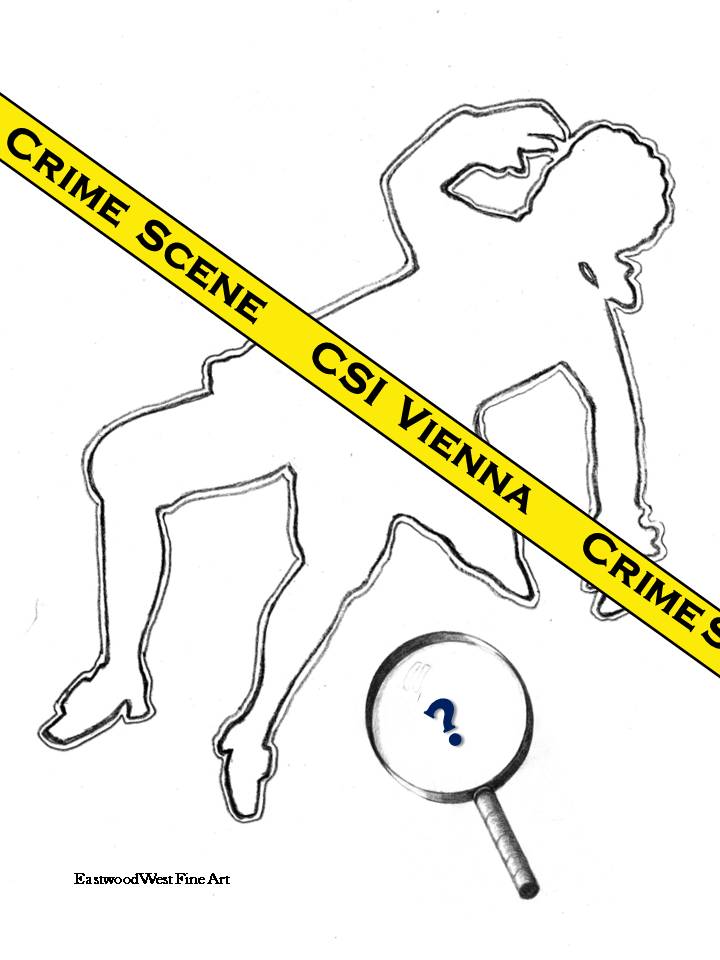
Mozart Crime SceneOn this day in 1791, Antonio Salieri was framed for murder. Wolfgang Amadeus Mozart couldn’t possibly have died of natural causes at the age of 35. Even by the standards of 18th century medicine, if you survived childhood’s 50 percent mortality rate, you likely would live to 43. Yes, doctors could bleed you to death; the medical profession seemed unaware that a shock-induced coma might be unhealthy–however restful it looked. And if the blood-letting doctor had previously used that lancet on an infected boil, who knows what other surprises were entering the patient’s circulatory system?

Through the science of second-guessing, historians now think that Mozart actually died of rheumatic fever. But that is too prosaic an autopsy. The public demands a conspiracy! Someone had to kill Mozart. Salieri became the popular scapegoat; there were rumors of his deathbed confession to murdering Mozart. For some reason, the gossip especially appealed to Russians; at least, it passed Tsarist censors–although they would have preferred a story incriminating liberals and Freemasons. In 1831, six years after Salieri’s death, Alexander Pushkin wrote “Mozart and Salieri” to dramatize the alleged rivalry between the two composers. (Pushkin was shot six years after that, but the killer was Mrs. Pushkin’s lover and not Salieri’s ghost.) However unfounded and unfair, the Salieri rumors still incite and inspire artists. In 1897, Rimsky-Korsakov wrote the opera “Mozart and Salieri;” but it was nothing to drive Tchaikovsky to murder. (Actually, Tchaikovsky was already dead–and there are rumors about that, too.) Of course, we are familiar with Peter Shaffer’s “Amadeus”; if his play does not exonerate Salieri, at least it presents an unbearable Mozart we’d all like to strangle.

But Salieri really is an implausible villain. The man was a respectable composer and a highly esteemed teacher; if he really possessed a homicidal envy, he would bumped off one of his students–a youngster named Beethoven. Yes, Salieri was Italian but that is not always criminal. Salieri was from Northern Italy; they don’t kneecap in Milan. Any crime there is strictly white-collar and no one has ever accused Salieri of embezzling Mozart.

But if you want a versatile culprit, you should consider Mozart’s favorite librettist: Lorenzo Da Ponte. They collaborated on “The Marriage of Figaro”, “Don Giovanni” and “Cosi Fan Tutti”. (Without Da Ponte’s Italian libretto, “Don Giovanni” would have been “Ritterherren Johan.” How seductive is that?) So why blame Da Ponte? Even if he had no motive for killing Mozart, Da Ponte possessed an all-encompassing guilt that could fit into any conspiracy theory. In his remarkable, scandalous life (1749-1838), Da Ponte was a Jew, a defrocked Catholic priest, and an Ivy League professor. There’s something to offend everyone.

However, I personally suspect that Mozart was done in by his final opera. Try explaining the plot of “The Magic Flute”. You will either have a cerebral hemorrhage or get diabetes.