The Morbid the Merrier
Posted in General, On This Day on February 26th, 2010 by Eugene Finerman – 4 Comments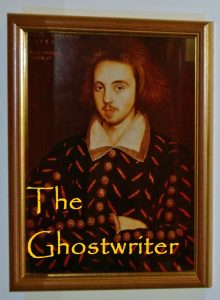 February 26, 1564: The Least Mysterious Thing About Christopher Marlowe
At least there is no debate as to when and where Christopher Marlowe was baptized. It was in Conventry, England on this day in 1564, and the Anglican priest failed to observe the infant’s genius. The date, nature, and cause of his death, however, are questions inciting civil wars in college English departments.
Did he really die in a brawl in 1593? Was he a Catholic spy? Was he murdered by the Crown? Did he fake his death and live on to become the ghostwriter for William Shakespeare, Jane Austen and Winston Churchill?
According to the mere facts, the 29 year-old Marlowe got in a fight over a bar bill and rather imprudently tried deflecting a knife with his eye. But that is too petty a death to be accepted! (Occam’s razor was never meant to be a murder weapon.) No, the Robert Mapplethorpe of Elizabethan Theater deserves some drama. He had to be the victim of a conspiracy. Here is a theory that combines creative jealousy with international intrigue: Marlowe was murdered by Miguel Cervantes. At the time, Cervantes was a middle-aged semi-invalid, but Marlowe wouldn’t have been that tough.
Here is another theory: the English Secret Service killed him. Since Marlowe was gay and went to Cambridge, he must have been a spy. The question is for whom? The sentimental among us would like to think that the Cambridge kids were spying for Russia even back then. Marlowe actually could have known Boris Gudunov. But what secrets did 16th century England possess that Russia coveted? Maybe long division. It is unlikely that Her Majesty’s Secret Service was particularly worried about Russian spies. Khristov Marlovsky would not have been worth killing.
No, to be significant, Marlowe would need to be a spy for Spain or the Catholic Church. So let’s start searching “Tamburlaine” or “Doctor Faustus” for any coded Papist messages. “The face that launched a thousand ships” might really refer to Philip II and the Armada. So, now he is incriminated. But why would the Crown need to arrange his assassination. If the English government could publicly execute a Queen, Dukes, and Jesuits, what is the difficulty in hanging and drawing a flamboyant playwright?
But who is to say that Christopher Marlowe ever died? Perhaps “Dr. Faustus” is actually the story of a writer and his literary agent. (And I wish that I could get that deal.)