On This Day

The Kaiser’s Toy

Posted in General, On This Day on May 31st, 2010 by Eugene Finerman – 1 Comment


May 31, 1916:  The Undefeated German Navy


Consider the greatest naval battles in history (and if this is a first for you, welcome to the introductory course).  Some of these monumental clashes had a profound strategic effect. 

After Salamis in 480 B.C., with the Greek destruction of their fleet, the Persians were left with nothing but their Iranian charm for supplies.  The battle of Actium, in 31 B.C., determined whether the first Roman emperor would be a dissipated has-been or a reptilian youngster.  (Bet on the reptile.)  At Midway in 1942, the Japanese lost four aircraft carriers and the initiative; after that, their strategy was fighting to the death rather than winning.

But other great naval battles really had no practical strategic consequence other than proving which fleet had the bigger ballast.  Lepanto, fought off the coast of Greece in 1581, was just a duel of imperial egos.  The Turks had no plans to invade the western Mediterranean, and the Spanish had no plans to liberate the Eastern Mediterranean.  The naval battle only indicated that God–that day–was more Catholic than Moslem.  Sometimes the motive for battle seems to be masochism.  The French and Spanish had no need to challenge the British at Trafalgar.  Perhaps they wanted to see if Lord Nelson was really that good; he was. 

And the greatest naval battle of World War I–Jutland–was just the fullfillment of a boy’s longstanding fantasy.  Unfortunately, the boy became Kaiser Wilhelm II–and he never grew up.  He wanted a navy that could challenge Britannia’s rule of the sea.  There was no practical purpose for a large German fleet.  Germany had a limited coastline and its neighbors on the Baltic Sea were not maritime threats.  Denmark had been behaving itself since the 12th century.  Perhaps the lumbering, outdated Russian fleet could have attacked Hamburg but only if someone would tow it.  Nein, the only reason for a massive German navy was to gratify the Kaiser’s ego.

Wilhelm may have been a boisterous buffoon but he was too dangerous to ignore.  So Britain had to meet hs challenge by constructing  more and larger battleships.  Indeed, meeting the demands of the British navy left shipbuilders short of supplies for other projects.  A firm in Belfast had to cut a few corners in assembling a luxury liner; but if that damn ship hadn’t hit the iceberg, no one would have been the wiser. 

Furthermore, Britain ended its longstanding policy of magnificent disdain of European politics and alliance.  In 1907, it formed a cordial entente with France and Russia.  So, Britain was ready for war.  It merely had to wait for Germany to do something irrevocably stupid, like invading Belgium in 1914.

The German strategy was to goosestep its way to Paris in six weeks.  As far as the German High Command was concerned, the Navy was the Kaiser’s toy.  Nearly two years later, the army was still on its way to Paris.  (It would get there in 1940.)  The British navy was in the North Sea, daring the Kaiserliche Marine to leave port.  On May 31, 1916, the German fleet finally tried to justify its existence.

Off the Danish peninsula of Jutland, the two fleets manuevered and shot at each other.  At the end of the day, an accountant tallying the corpses and wrecks would have said that Germany won.  With a smaller fleet, it inflicted far more damage, casualties and ship losses on the British.  Yet, the German fleet then retreated to its home ports, never to sail again and leaving the British navy in uncontested controls of the seas.

Ironically, that Fleet would have won the war–if it had been used in 1914.  At the onset of the War, the fleet could have sailed into the North Sea and the English Channel.  Yes, it would have found itself cut off from supplies, outgunned and without access to a friendly port.  What is German for sitting duck?  But so long as the German Navy was still floating between France and Britain, the British would have been unable to send 120,000 men to Belgium and Northern France to stop the German invasion.  Without the added obstacle of the  British army (which the Von Schlieffen plan had failed to calculate) the Germans might well have made their six-week itinerary to Paris.   

So the Kaiser’s navy would have won the war–even if none of the sailors lived to celebrate it.


The Edward Bulwer-Lytton Anti-Defamation League

Posted in General, On This Day on May 25th, 2010 by Eugene Finerman – 4 Comments

May 25, 1803: The Author Begins His Story

Today is the  birthday of the unfortunate Edward Bulwer-Lytton (1803-1873). It is fashionable to ridicule him as the worst writer in the history of English. In fact, the novelist and playwright was quite popular in his day.  The young aristocrat may have started as a literary dilettante, dabbling in poetry at Cambridge; but after being disinherited by his family for marrying someone Irish, he had to earn a living.  If his writings were half so romantic as his life, no wonder he was a success.  His acclaim was international.  The young and impoverished Richard Wagner, looking for a story with box opera appeal, adapted Bulwer-Lytton’s novel “Rienzi” into an opera.  (And no doubt he never paid the British novelist a pfenning.) 

With his bloodline, wealth and popularity, Bulwer-Lytton won a seat in Parliament and rose up to the middle ranks of Tory leadership.  He would serve in the cabinet and eventually become a baronet.  (There was another novelist among the young Conservatives, less wealthy and with a far more exotic bloodline, but Mr. Disraeli would also achieve some fame.) 

And there is no reason to think that Bulwer-Lytton wouldn’t have been a best-selling author today.  Consider how many times his novel ”The Last Days of Pompeii” has been made into a movie.  His great-great grandson, the Fifth Earl of Lytton, thanks us all for the residuals.  Yet, Edward Bulwer-Lytton now is a figure of ridicule.  One of his passages is cited as an exemplar of horrible writing.  Here it is:

“It was a dark and stormy night; the rain fell in torrents–except at occasional intervals, when it was checked by a violent gust of wind which swept up the streets (for it is in London that our scene lies), rattling along the housetops, and fiercely agitating the scanty flame of the lamps that struggled against the darkness.”

I don’t think that it is terrible at all. Yes, it is florid and overwrought: in other words, typically Victorian.

The greatest of the Victorian writers Charles Dickens would have been just as lavish with adjectives. And his opening scene would have included a colorful lamplighter who would reappear throughout the story, at the most incredible times, with remarkable revelations for the hero. “Many the year ago, before I become a magistrate, I was a lamplighter. One day, while making me rounds, I discovered a foundling. How wert I to know it was me long-lost sister’s child? Which makes you my nephew and ‘eir.”

I really don’t understand why Bulwer-Lytton has become the object of such derision. Perhaps he should have given Mt. Vesuvius an endearing cockney accent.

Louis, Louis

Posted in General, On This Day on May 21st, 2010 by Eugene Finerman – 5 Comments

May 21, 987:  Nothing Could Be Finer Than To Be a Carolingian in Mourning

On this day in 987, King Louis V–known as the Do-Nothing–did not live up to his name. In fact, he did not live, and so finally accomplished something. So ended his one year rule, his twenty-year life and his 236-year dynasty. He, the last of the Carolingian kings of France, was beset by foreign invasion (the Holy Roman Emperor, his first cousin) and rebellions by the nobles (second and third cousins). Louis really did not get along with anyone in his family; his mother poisoned him.

So, that leaves you with this question: Which French King did inspire the song “Louie, Louie.” Well. let’s consider all the Royal Lou’s of France and which one would be an oversexed stoner.

Louis XVIII could have used a mistress. He disliked his Italian wife but his chief outlets were self-pity and food.

Louis XVII was merely a child when he died. The French Revolutionary guardians did take meticulous care of the young boy–but definitely not for his benefit.

Louis XVI suffered from sexual dysfunction–and Viagra wouldn’t have helped. It was some sort of physical blockage. The only solution was surgery. Despite the quality of 18th century surgery, Louis survived the procedure and was even cured. He finally was able to consummate his marriage. However, that was also the limit of his libido.

Louis XIV was short, unattractive but apparently irresistible. (Royalty frequently is; who dares refuse.) There is a famous story of the Queen, and three of her ladies-in-waiting riding in a coach; they were all pregnant by Louis (although not from the same coach ride). So Louis was certainly was over-sexed but he still found the time to rule rather well. And he never would have referred to Versailles as a pad or crib.

Louis XIII had a very active sex life, but not with women. What is the male equivalent of a mistress? (Historians can only speculate as to the identity of Louis XIV’s father.) Louis Treize was the Baroque equivalent of a stoner. Fortunately for him and France, Cardinal Richelieu made a brilliant dealer.

Louis XII had three wives, so he wouldn’t have had time for mistresses.

Louis XI was too cheap to have mistresses.

Louis X died young; he was likely poisoned by a sister-in-law who managed her husband’s career. (Yes, he got to be king.)

Louis IX was Saint Louis, so mistresses are out of the question.

Louis VIII was married to a Spanish gorgon; he wouldn’t have dared.

Louis VII had the disposition of a monk. His first wife–Eleanor of Aquitaine–cheated on him.

Louis VI was known as Louis the Fat. Guess his vice.

Louis V, alias the Do-Nothing, you’ve already met.

Louis IV, alias Louis the Alien (he was raised in England), was so powerless that he couldn’t afford a mistress.

Louis III died at 19, so he didn’t even have a nickname.

Louis II, the Stammer, lived to be 33 but his health was as bad as his pronunciation. Even if he had been in better shape, late 9th century France was not a conducive time for hedonism. It was barely conducive for subsistence.

Louis I was called the Pious. That nickname would deter most aspiring mistresses.

So, who does that leave….Louis XV was handsome, charming and conscientiously incompetent. Usually the inept are unaware of their debilities, but Louis knew precisely how hapless he was and he didn’t care! He let his mistresses run and ruin France. (Madame de Pompadour was a complete disaster–or a brilliant secret agent for the British). If Handel or Haydn had composed “Louie, Louie”, the song definitely would have been about le Quinze.

Your Saint of the Day

Posted in General, On This Day on May 14th, 2010 by Eugene Finerman – 2 Comments

Today is the official feast day of St. Matthias.

I would tell you all about him, but the Church itself is rather bewildered on the subject. The Gospels are unaware of him, but he is mentioned in the Acts of the Apostles as being chosen to replace Judas Iscariot–who obviously lost his tenure as a saint. The Church’s Board of Directors felt that it needed a 12th apostle. Unfortunately, the resurrected Jesus had failed to hire anyone; no doubt, He was preoccupied with packing for His Ascension. So, the Board of Directors picked Matthias (which is more than can be said for St. Paul).

And that ends the history. Of course, theological etiquette requires a few legends about him. For instance, the nature of his death is a buffet of choices. He was either killed by Jews in Jerusalem, pagans in Georgia or cannibals in Ethiopia. (The theological affiliation of the cannibals is unspecified; they could have been Christians who took communion too literally.) And he is also reported to have died of old age in Jerusalem–but that is too boring to be plausible.

Matthias at least is kept busy being the patron saint of alcoholics. If your life were a perpetual fog, you would want a saint in a similar condition.

A Compassionate Alternative to Hanging

Posted in General, On This Day on May 13th, 2010 by Eugene Finerman – Be the first to comment

May 13, 1787:  Once You’ve Lost America, Where Do You Dump Your Petty Criminals?

In 1606, Dutch explorer Willem Jansz discovered a large land mass south of New Guinea.  From his tentative exploration, he found nothing to merit further interest.  The land was swampy, and the natives poor and hostile.  It would be another 36 years before the Dutch ventured a second expedition to this land.  Abel Tasman sailed along the western and southern coasts of what proved to be a very large island.  He found the lands there to be arid and uninhabitable.  Yet, however dismal, this territory required some designation on maps.  So cartographers gave it the generic name of Australis, the Latin for southern. 

Not until 1770 did anyone bother to explore the east coast of Australis.  British explorer James Cook found its land to be surprisingly habitable.  The climate was temperate and the soil seemed arable.  Eastern Australis could provide the basic requirements of a European colony.  Claiming the land for Great Britain, Cook named the territory New South Wales.  So Britain now had a distant island that offered a meager sustenance–and that proved exactly what Britain wanted.

In politics and science, 18th century Britain certainly was in the forefront of the Enlightenment.  But that energetic progress did not extend to British justice.  There the gallows was the usual recourse, dispatching thieves as well as murderers.  Still, there was some leniency in the system.  Shoplifters, poachers, prostitutes and debtors really did not deserve to hang.  For stealing food, seven years in prison was sufficient retribution.  The problem was that the prisons were teeming with these petty criminals.  Britain could make better use of them by transporting them to its far-flung colonies.  There, the felons could labor on government projects or be sold as indentured servants, working as slave labor for the length of their prison sentence.  The American colonies had served as a useful dumping ground for these criminals.  Indeed, Georgia had been founded expressly as a penal colony.  However, since 1775, those colonies proved completely uncooperative with any British policies.  With America lost, Britain found a use for New South Wales. 

On December 6, 1786, the British government authorized an expedition to establish a penal colony in Australis. Eleven ships–known in Australian history as the “First Fleet”– departed from Britain on May 13, 1787.  On board were 772 prisoners, of whom 189 were women, 247 marines as guards, and supplies to sustain the colony for its first year.  Sailing around Cape Horn and through the Indian Ocean, the Fleet reached New South Wales on January 18, 1788.  They first landed at an inlet called Botany Bay but the site lacked a source of fresh water.  Sailing a short distance north, the Fleet found a more promising site for settlement.  It would be named for Britain’s Home Secretary:  Lord Sydney.  

The First Fleet would be followed by a Second Fleet, a Third Fleet and eventually no one bothered counting.  Each fleet had a cargo of criminals.  Over the next 80 years 162,000 shackled men and women would be transported to Australia.  Today, the Commonwealth has a population of 22 million.  Four million of them are descended from those convicts: the First Families of Australia.

Wedding Announcements

Posted in General, On This Day on May 12th, 2010 by Eugene Finerman – 1 Comment

May 12, 1191:  Richard the Lion-Heart Marries Berengaria of Navarre

We are still waiting for the marriage to be consummated.  Richard evidently was unfamiliar with the adage “Politics makes straight bedfellows.”  In fairness to Richard, he never misled that poor Spanish princess.  His mother did.   Eleanor of Aquitaine was worried that her 33 year old son had yet to marry.  He was King of England, a hereditary position, and heredity usually requires a certain physical exertion.  His younger brothers were married–even the gnomish John.  (Yes, his bride was the unwilling one.)  So Eleanor was determined to get her favorite son a wife.

On parchment (paper had yet to be imported from China), Richard would have seemed a great catch.  He was King of England and Duke of half of France: you had to go to Constantinople to find a Christian boy with a better resume.  Furthermore, Richard was handsome and chivalrous.  What more could a princess want?  Well, yes, apparently the princesses of France and Germany had heard about “that”.  But the royal family of Navarre either hadn’t or couldn’t afford to be choosy.  The smallest, most precarious kingdom in Spain could use the butchest son-in-law in Christendom, and so Berengaria’s troth was really plighted.

Richard, who had no compunction about trying to kill his father, somehow couldn’t disobey his mother.  All right… he would get married, but he wasn’t making it easy.  First, they had to find him.  Richard was off to the Crusades.  His last known address was Messina, Sicily.  So his 69 year-old-mother, with Berengaria in tow, arrived there in March, 1291.  Fortunately, Richard was still in Sicily but it was during Lent, and he wouldn’t think of getting married then.  But rather than wait a few weeks, Richard now was in a hurry to get to the Holy Land.  After all, there were Moslems and Jews waiting to be killed, along with any unfortunate Greek Orthodox bystanders.  However, if Berengaria was willing to tag along, Richard would find the time to marry her.  Perhaps, after he captured Jerusalem…or Mecca.

Eleanor no longer had the patience or stamina to goad Richard to the altar.  She returned to France, but Richard had not completely escaped the chiding females of his family.  The dowager queen of Sicily happened to his sister Joan,  and she was quite prepared to organize a wedding in the Holy Land.  When Richard set sail, Joan and Berengaria weren’t far behind.  A storm struck the fleet, however, and the ship carrying the theoretical bride and the aspiring matron of honor was driven off course to Cyprus.  There the Byzantine governor–demonstrating why his cousin the Emperor wouldn’t  trust him in Constantinople–attempted to seize the royal women for ransom.  Of course, the chivalrous Richard had to rescue the two damsels in distress.  He incidently conquered Cyprus, too.   (The Byzantines would never get it back.)  What happened next defies explanation but would make a wonderful ad for Cypriot Tourism:   Cyprus–where even the unwilling get married!  Yes, on this day in 1191, Richard succumbed to formality.

Berengaria went along on the Crusade, perhaps mistaking it for a honeymoon, but soon decided to return to Europe.  At least, she now had the expense allowance befitting a queen.  France could be very comfortable for the rich and, of course, who could blame her for dropping by Navarre to flaunt her position.  Ironically, Berengaria never visited Britain, the only Queen of England with that unique omission.  (Of course, Richard was rarely there, either:  six months out of his ten year reign.)  The King and Queen had a platonic marriage; in fact, they rarely saw each other.    The Pope felt compelled to advise Richard on marital duties.     In similar circumstances other women might have  succumbed to therapeutic sins, but Berengaria never did.  She evidently was saving herself for Richard. 

He died in 1199:  a minor arrow wound but a very bad doctor.  The widow was in her thirties, but she never was  interested in a second–or real–marriage.  Indeed, she would eventually join a convent.  As Mrs. Plantagenet, she already had eight years practice as a nun.

And Now the Nominations for Megalomaniac

Posted in General, On This Day on May 11th, 2010 by Eugene Finerman – 2 Comments

May 11, 1927:  The Studio Moguls Demand Respect–or as they would say “Fancy-Smancy”

Hollywood is one of the great and enduring success stories of America.  In 1906, the perennial sunshine of Southern California was conducive for shooting film and tempted a New York-based studio to open a west coast office.  Even then, filmmakers had a tendency to copy each other.  By 1915, most American movies were made in California, and an agricultural community outside of Los Angeles had become the center and synonym for movies. 

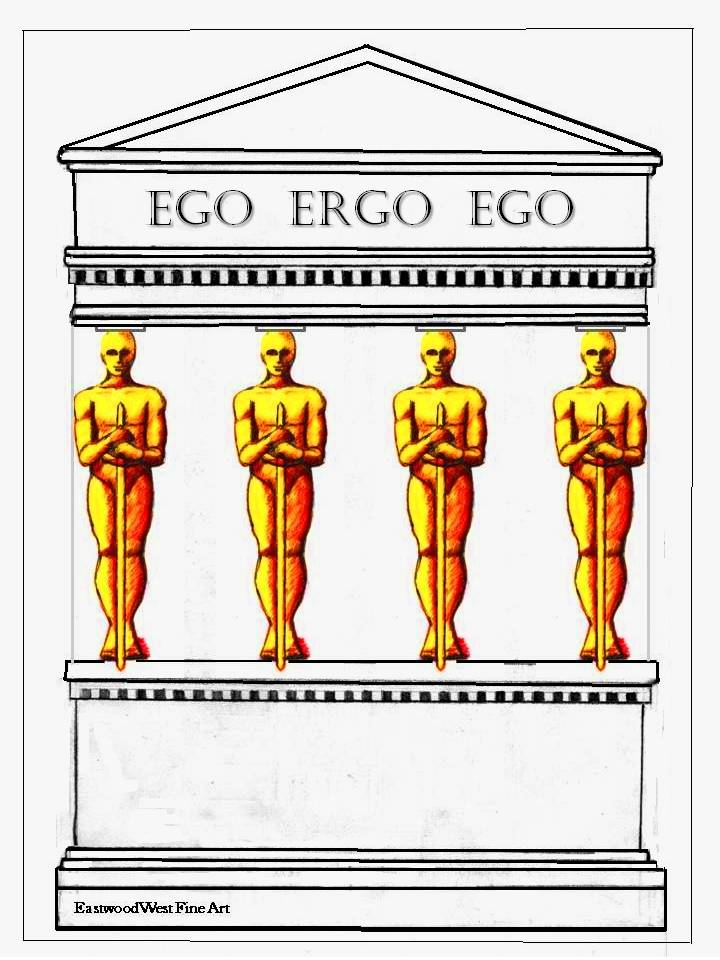
The world loved Hollywood’s films.  Charlie Chaplin, Mary Pickford and Douglas Fairbanks by themselves ensured a trade surplus for America.  As for the producers and studio heads–Louis B. Mayer, Cecil B. DeMille, Samuel Goldwyn and others–they were rich and powerful but still dissatisfied.  Men of modest origins but not modest natures, they wanted honors and deference.  In another time or country, they could have acquired titles of nobility; but 20th century America had none to offer.  However, in 20th century America these producers were free to anoint themselves.  So they did.  On May 11, 1927 they formed a society whose chief purpose was self-adoration.  Grasping for prestige, the organization’s name was the Academy of Motion Pictures Arts and Sciences.  Its first president–Douglas Fairbanks, himself–proposed some awards for merit. 

The first awards ceremony was at a banquet the following year.  Ten awards were given out in 15 minutes.  We would recognize most of the awards’ categories:  best film, best actor, best actress, best director, etc.  But there also was a prize for “Best Title Writing”.  Movies then were silent, and any narration or dialogue would appear on title cards flashing on the screen.  So, when the villain wants to have his way with Lillian Gish, a title card would express Miss Gish’s indignation:  “You cad!”  The first award for best Title Writing was also the last.  In 1927’s”The Jazz Singer” Al Jolson had turned to the audience and said aloud, “You ain’t heard nothing yet.”  The Hollywood film now talked.

The tradition of the terrible acceptance speech also dates to that first Awards ceremony.  The winner for best actor was Emil Jannings.  He was German but in silent films no one could detect his miserable knowledge of English.  The advent of the “talkie”, however, ended his prospects in Hollywood.  He actually was on a train out of town when the first Awards ceremony was held.  Jannings wired his acceptance speech, saying thank you and adding  “I therefore ask you to kindly hand me now already the statuette award for me.”


“Knuckles” Lavoisier

Posted in General, On This Day on May 8th, 2010 by Eugene Finerman – Be the first to comment

May 8, 1794:  Lavoisier Observes the Effect of Hemoglobin on Steel

In other words, Antoine de Lavoisier was guillotined for treason. This may have been one of the greatest senior pranks, and certainly got the students out of taking their chemistry finals. Actually, “The Father of Modern Chemisty” never taught the subject; so he was not the victim of irate students. His vindictive enemies were the taxpayers of France.

Unlike a modern professor who would supplement his income by forcing the students to buy his books or by sitting as an unctuous cipher on a corporate board, Lavoisier earned money as an extortionist. Mind you, his racket was sanctioned by the French Crown; he had paid the government up front for his extortionist permit. The specific term for the racket was “tax farming.” A tax farmer would pay the Crown for the right to collect taxes in a specified region. The similarity of the words franc and franchise is no coincidence. The more money the tax farmer collected–no questions asked about the tactics–the more he got to keep. You might be surprised but very few philanthropists applied for the position.

Perhaps the squeezed subjects in Lavoisier’s territory should have been gratified to know that they were subsidizing his scientific research. It was not as if he was spending their money on luxurious carriages and young mistresses. Unfortunately, the French taxpayers might have been more sympathetic about that.

The Prime Minister Primer

Posted in General, On This Day on May 7th, 2010 by Eugene Finerman – 6 Comments

I. Party Labels and Libels

God, at least the English speaking one, must believe in a two-party system.  So, in the political Genesis of late 17th century, one party was a gang of curmudgeons who hated Catholics, distrusted kings and liked business.   They were known by their opponents as the Whigs, a Scottish term for bumpkin.  The other party was a pack  of squires who loved themselves–frequently to the point of syphilis, revered hunting, hangovers and the monarchy, and considered religion merely a matter of etiquette.  They were known by their rivals as the Tories, an Irish term for robber.  For some reason, both factions accepted these libels as their formal names.

Bumpkins or robbers:  it wasn’t much of a choice for the English voter but then there weren’t many English voters either.  The franchise–with its convoluted medieval property requirements–was largely limited to the candidates themselves and their male relatives.  In a contested borough, the candidate with the most dependable sons-in-law won.  Even after the first electoral reform bill of 1832 created a lower and more uniform property requirement–only one in six men was eligible to vote.   

Nonetheless, with this somewhat enlarged franchise, the two political parties reconciled themselves to change–particularly their names.  Whig and Tory sounded too much like private clubs. The usually hidebound Tories took the initiative by test-marketing the name Conservative.  In 1834 Prime Minister Robert Peel started alluding to his Conservative philosophy, Conservative program, Conservative administration, etc.  But many Tories were not thrilled with the new name–or with Robert Peel for that matter.   It took about 25 years before the party was officially renamed the Conservatives.  Of course, in response to the ballyhooed “new and improved” Conservatives, the Whigs now chose a more coherent and preferably accurate name: the Liberals.  And so, throughout the 19th century, these two parties remained the either-or of British politics. 

The British franchise was gradually expanding and by 1900 it encompassed most British males.  Of course, the workin’ man had nay fondness for the Tories, but he also felt little affinity with the middle-class Liberals.  Some labor unions decided to form a political party–and since British politics somehow can’t maintain more than two viable parties at a time, it wasn’t good news for the Liberals. 

II. Who’s Who

My idea of casual conversation would include an allusion to Benjamin Disraeli. My acquaintance’s idea of a response was “Who?”  I hoped that I maintained a stoic mien but my eyebrows might have been doing the semaphores of  “How can you be so stupid?” The lady, a friend of a neighbor, is Gentile; so she would have been indifferent to the most interesting feature of Disraeli. I just provided her with a brief description of a “British prime minister of the 19th century and a man of extraordinary charm and wit.”

Now, I don’t want to seem like a pedantic bully  (even if I really am) but I think that a middle-aged college graduate should have heard of Benjamin Disraeli. He is not obscure. It is not as if I had belabored the poor woman with such prime ministerial ciphers as Henry Campbell-Bannerman or James Callahan. (And if I had mentioned Andrew Bonar Law, she might have slapped me.)

I realized that Americans’ criterion for historical significance is whether or not it was made into a movie. But Disraeli has been, and he has been portrayed by George Arliss, John Gielgud, Alec Guinness and Ian McShane. Given Disraeli’s origins, Adam Sandler or Ben Stiller may feel entitled to play him! No, that woman should have heard of Disraeli.

In fact, I think that a number of British prime ministers merit at least a minimum of recognition.

Lord North (1770-1782), the idiot during the American Revolution.

William Pitt the Younger (1783-1801, 1804-1806) if only because Pittsburgh was named for his father.

Earl Grey (1830-1834) because he had such great taste in tea. Yes, really.

Benjamin Disraeli (1868, 1874-1880): He needs no introduction.

William Gladstone (1868-1874, 1880-1885, 1886, 1892-1894): Disraeli’s rival. If Disraeli was Groucho, Gladstone was Margaret Dumont.

David Lloyd George (1916-1922) in case you were wondering who was standing next to Woodrow Wilson at Versailles.

Neville Chamberlain (1937-1940) who is now remembered as an insult and an accusation.

Winston Churchill (1940-45, 1951-1955), the man George Bush claimed to be–give or take the eloquence.

Margaret Thatcher (1979-1990): Disraeli’s politics with Gladstone’s charm.

Tony Blair (1997-2007) if only to prove that you were not completely oblivious.

Gordon Brown: well, maybe not.

p.s.  Let’s not forget the historic significance of this day:  http://finermanworks.com/your_rda_of_irony/2009/05/07/on-this-day-in-1915/

Cinco de Mayo

Posted in General, On This Day on May 5th, 2010 by Eugene Finerman – Be the first to comment

May 5, 1862:  The French Army Has a Faux Pas

Imagine that you have been mugged 47 times but once managed to fight off an attacker.  Wouldn’t you have a holiday to commemorate your token triumph?  Perhaps you wouldn’t but Mexico does.  On this day in 1862, a threadbare, outnumbered Mexican force thwarted a French attack on the town of Puebla. 

But what were the French doing there in the first place?  Napoleon III–unlike Hamlet–admired his uncle and tried to be a world conqueror, too.  Mexico had defaulted on its international debts, and  France decided to collect the entire country.  America’s Monroe Doctrine would have opposed France’s invasion, but we were somewhat preoccupied with the Civil War.  Besides, Napoleon III could tell that the South was going to win; so why worry about the former United States. 

Of course, the battle of Puebla was an embarrassment to the French but hardly a decisive defeat.  The rebuffed invaders  simply awaited reinforcements; the next battle of Puebla would be a French victory.  So was the battle of Mexico City.  With much of the country under their control, in 1864 the French established a puppet government with the affable and very gullible Austrian Archduke Maximilian as the “Emperor of Mexico”. 

Mexican patriots, rallying around President Benito Juarez, remained defiant if not particularly intimidating.  But in 1865, the American government was prepared to offer Juarez more than sympathy:  General Grant and an army of 50,00o were ready to enforce the Monroe Doctrine.  And suddenly the French decided to leave.  Unfortunately, the Emperor Maximilian did not.  He was certain that the Mexican people would like him once they got to know him.  He might have been right; but that evidently wasn’t the case with his firing squad. 

(The humiliated French would attempt to take out their frustration on the Prussians.  Any idea how well that worked out?  I wonder if Juarez sent Bismarck a complimentary sombrero.)

So today Mexico celebrates doing to the French what it wished it had done to us.  

p.s.  And another historic event on this day: 

http://finermanworks.com/your_rda_of_irony/2009/05/05/why-youve-never-heard-of-kalman-marx-2/